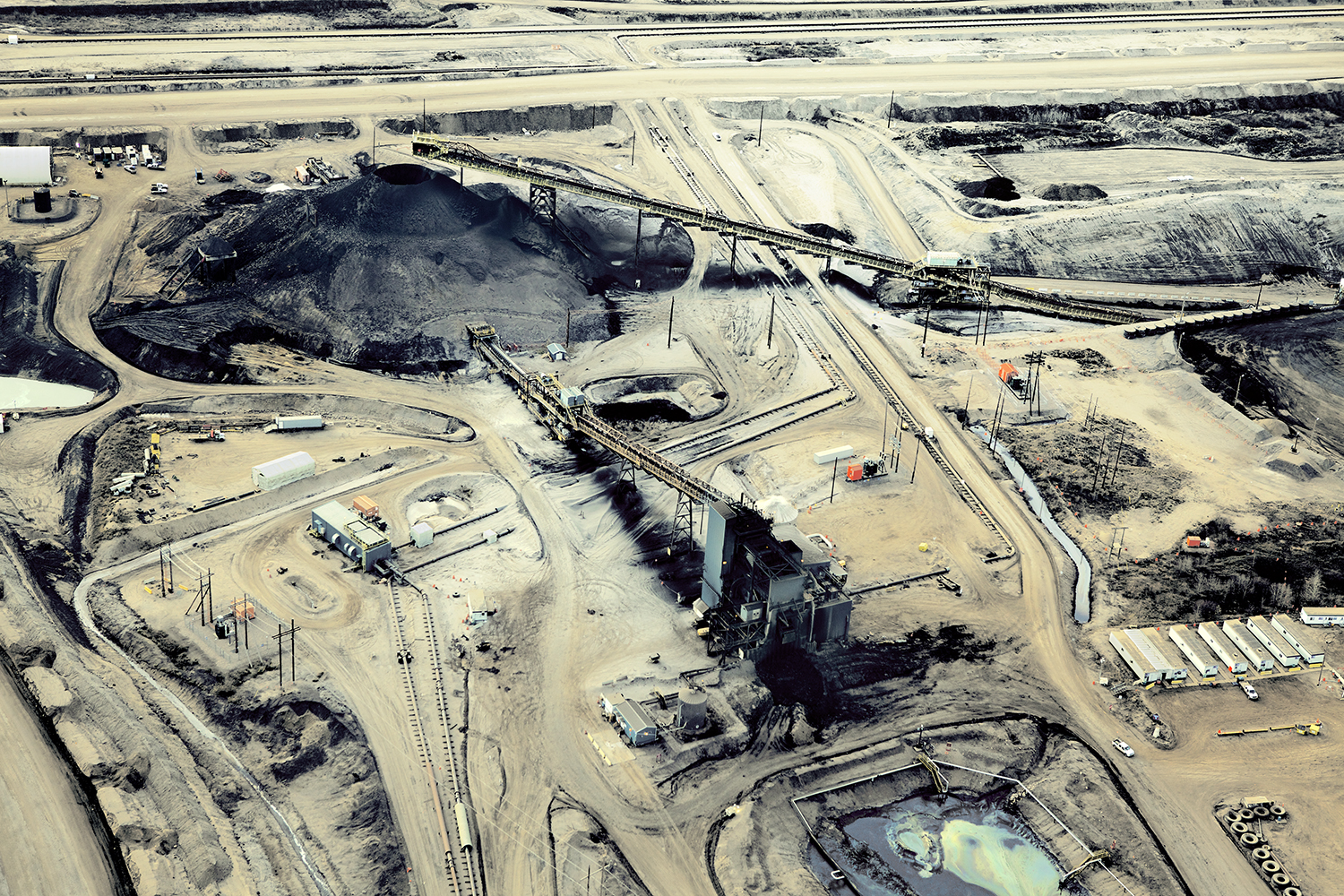
PULLING OIL FROM the tar sands of Canada is an ugly business. It scars the land with deep gashes, barren pits, and murky tailing ponds. It can be hard to grasp the scale of it from the ground, so photographer Stuart Hall rented a plane. What he saw stunned him. “There’s a lot of beauty in that place, but also a lot of destruction,” he says. “It’s like a bad marriage.”
Tar sands contain bitumen, a dense, highly viscous substance refined into oil, and Alberta sits on a deposit the size of New York. It supplies half of the oil that flows into the US from Canada, the nation's biggest supplier of foreign oil. The impact of all that mining fascinated Hall, a photographer who grew up in a coal mining family in Nottinghamshire, England. When he read about the massive sands six years ago, he knew it would be his next project.
The city sits on the Athabasca tar sands, the world's largest known deposit of bitumen. Some of the bitumen lies 250 feet underground and is removed with earth-moving equipment and enormous trucks. But most of it is deep enough to require injecting steam to heat the bitumen so it can be pumped to the surface.
Hall shot Giga Project over three years. He had hoped to shoot from the ground, but found the worksites hidden by barriers and blocks. So he chartered a plane. He vividly remembers seeing the mines from 5,000 feet. “It just goes on forever,” he says. “I come from quite a small country, so seeing something that big is frightening.”
The Athabasca deposit lies beneath a boreal forest and peat bogs, but you'd never know it from Hall's gritty photos. The landscape is stripped of color and texture, leaving a vast expanse of gray and black dotted by enormous machines.
The photos make you examine the ugly cost of society's insatiable thirst for oil.